BETA
Defense
Multi-mission, next-generation capabilities providing greater range, higher speed, and lower costs.
MV250
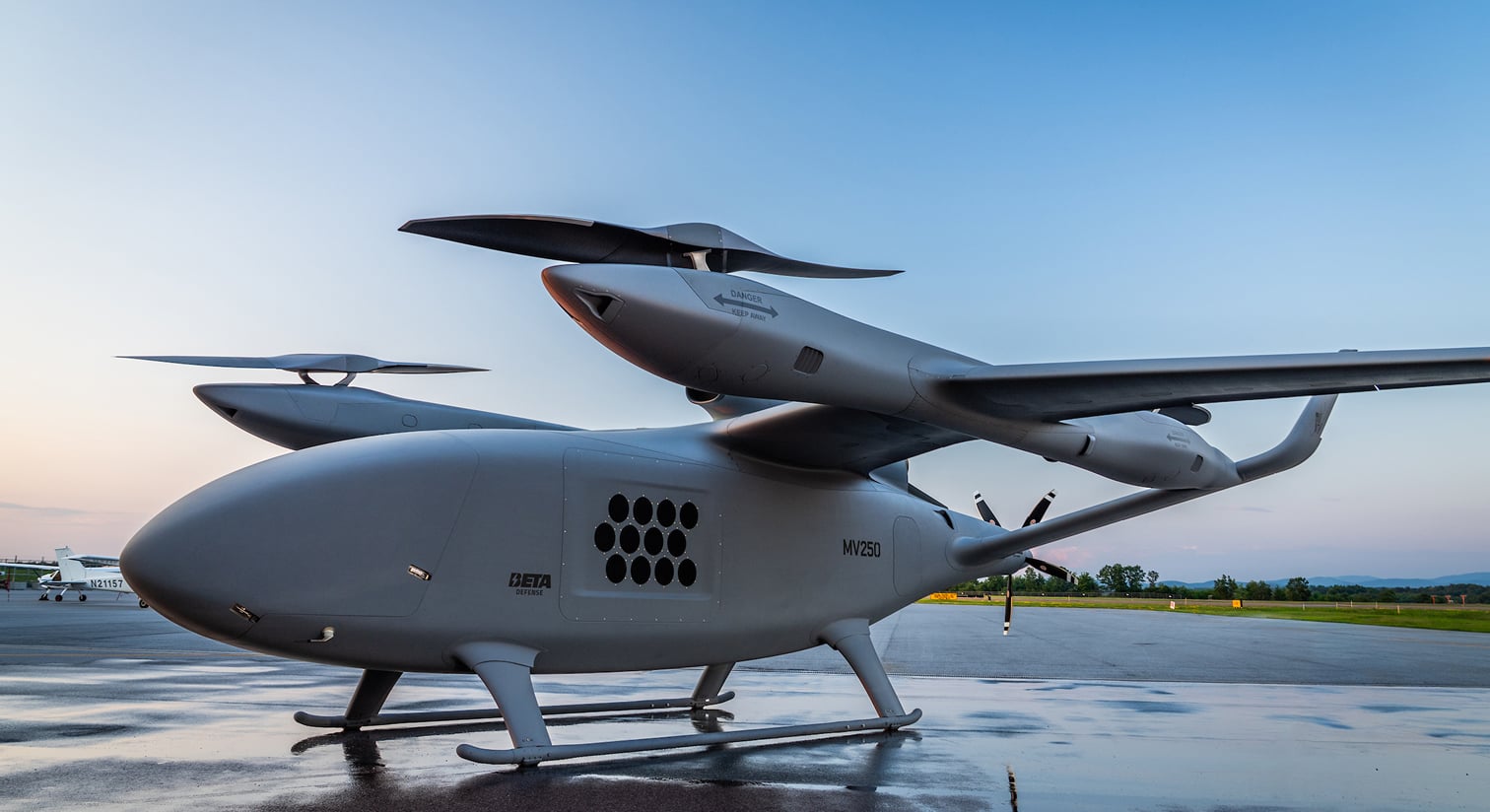
MV250 hybrid-electric autonomous aircraft flies further, faster and with lower sustainment costs than market peers. Its durability and rapid re-configuration capabilities make it the flexible, responsive, multi-mission platform that meets the demands of current and future military requirements.
250+ NM
Operational radius
170+ kts cruise
Speed
2,000lbs
Payload
Built for the Military Environment
Multi-Mission
Capable
Contested Logistics
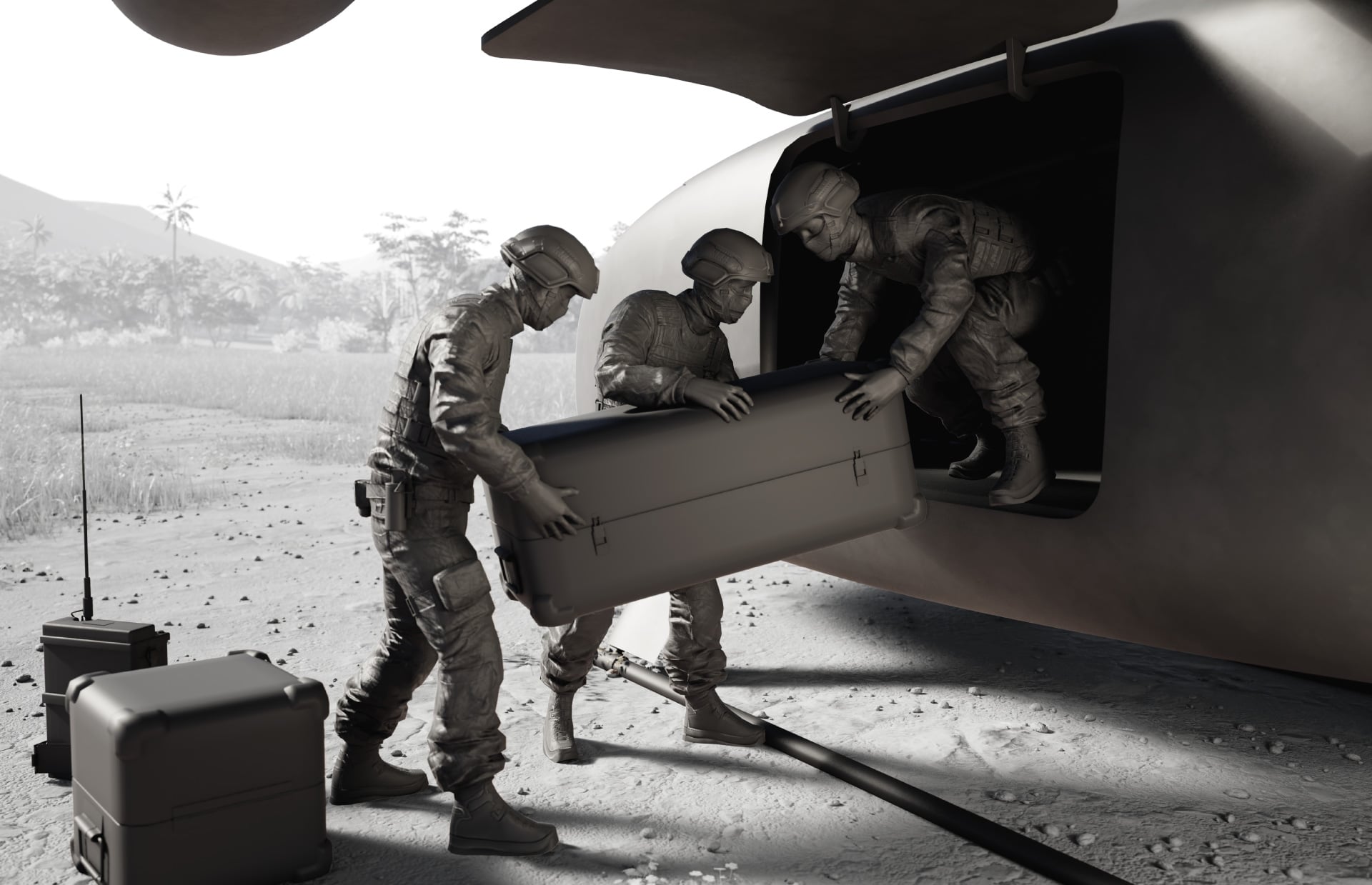
MV250 delivers the range, payload and throughput required to sustain distributed forces in the most austere operational environments. From ship-to-shore to airfields and forward bases, MV250 gives commanders options and range that no other platform can match.
Air Launched Effects
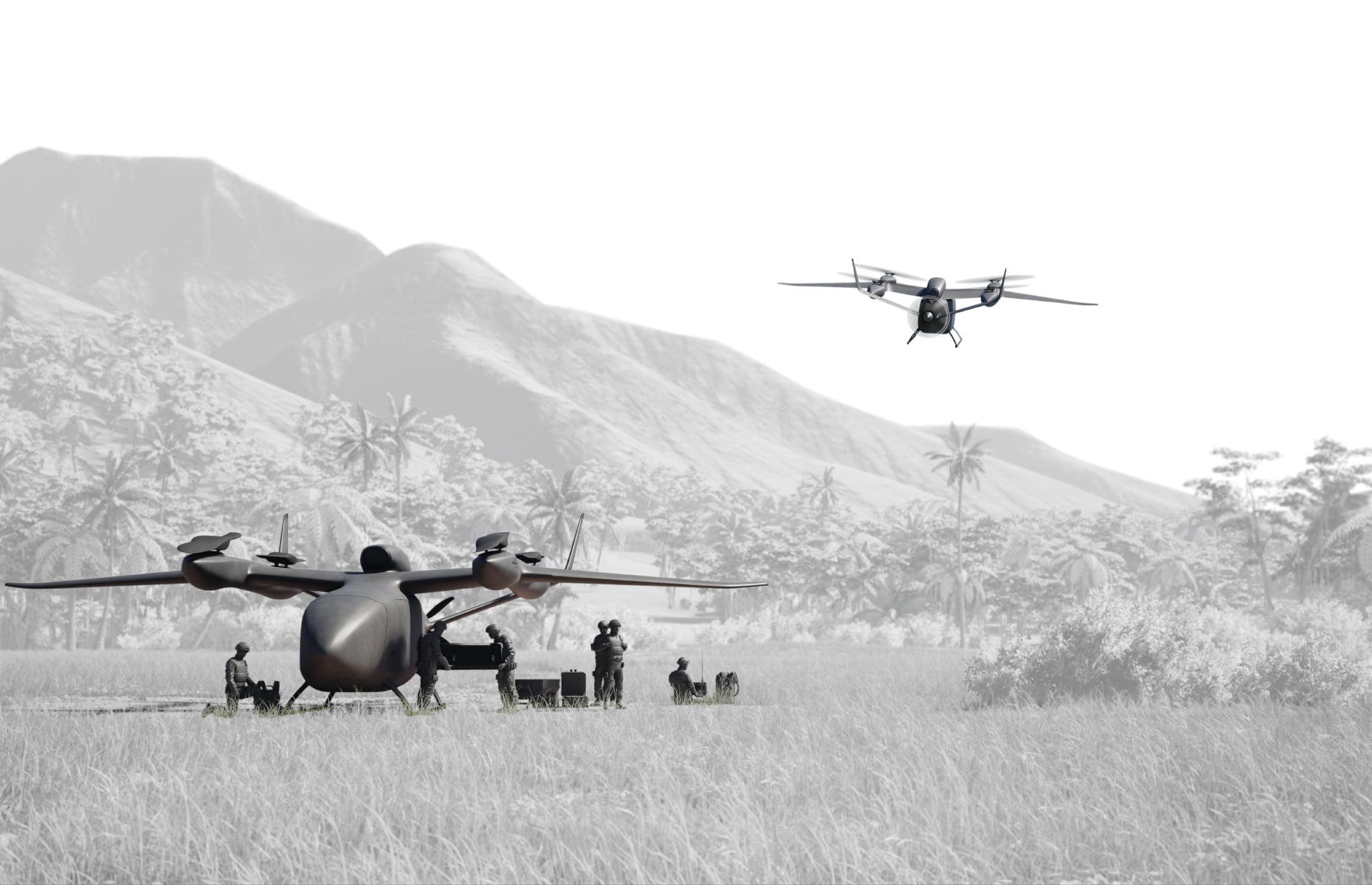
MV250 can be configured to deliver strike and surveillance assets, giving commanders long-range options without putting a crewed aircraft at risk.
Operating from secure, dispersed locations, MV250 deploys loitering munitions, drones, and ISR systems, extending reach and expanding magazine depth.
Medical and Disaster Response
Built for rapid deployment and reliability, BETA's aircraft change what is possible for CASEVAC, humanitarian assistance, and disaster response missions. MV250 delivers patients to care faster and keeps performing the mission.
Power Delivery
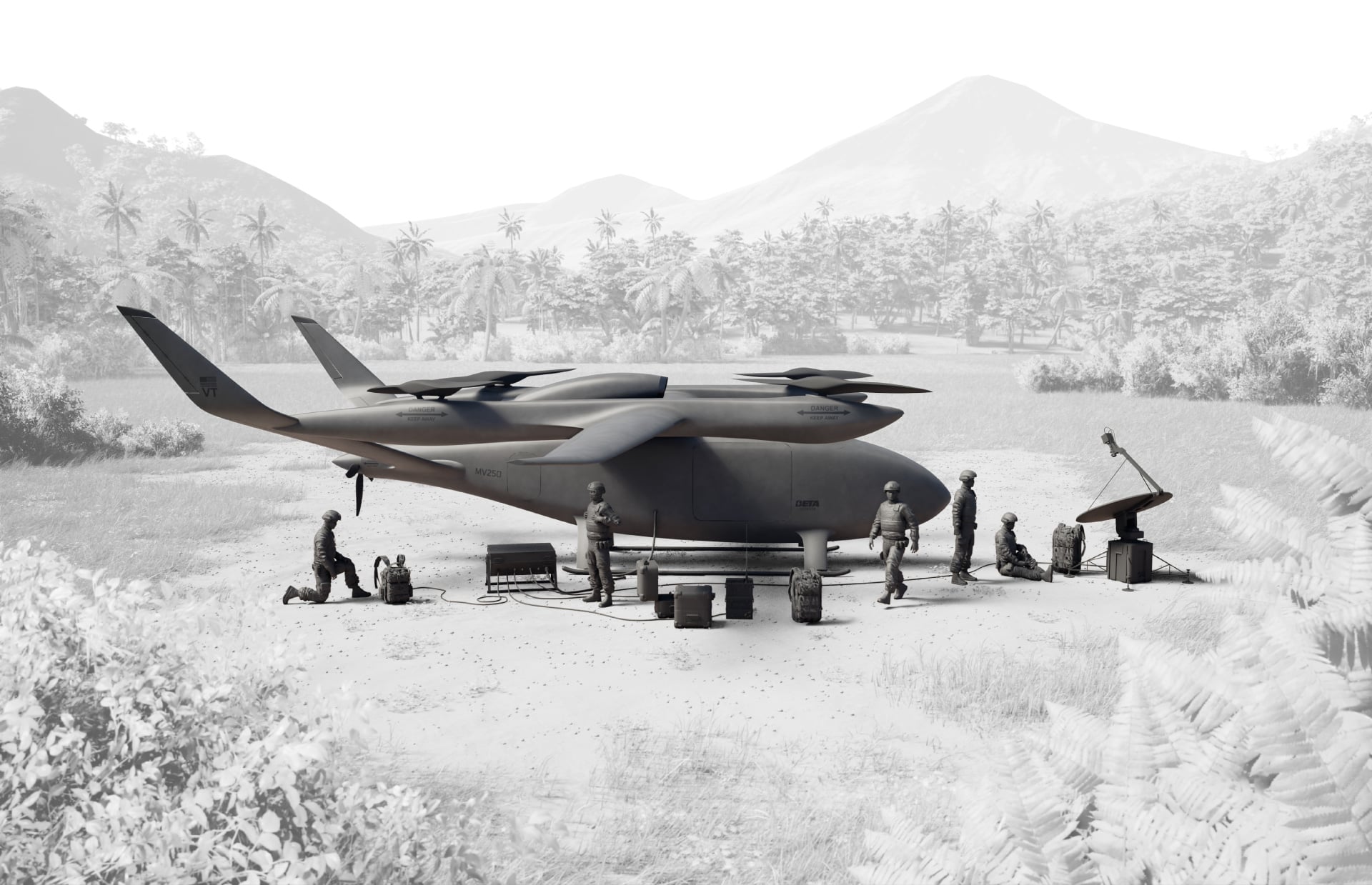
MV250 meets the growing power needs of forces spread across the battlefield, with the mobility to keep up. No longer tied to generators and fuel convoys, forces can move as fast as the mission demands.
Tactical power demands have increased 2,000% since WWII. Every MV250 sortie delivers ready-to-use power right to the tactical edge. Providing up to 500 kW, the MV250 can provide enough power for C3, cUAS, EW or direct energy weapons.
MV250
Turbogenerator
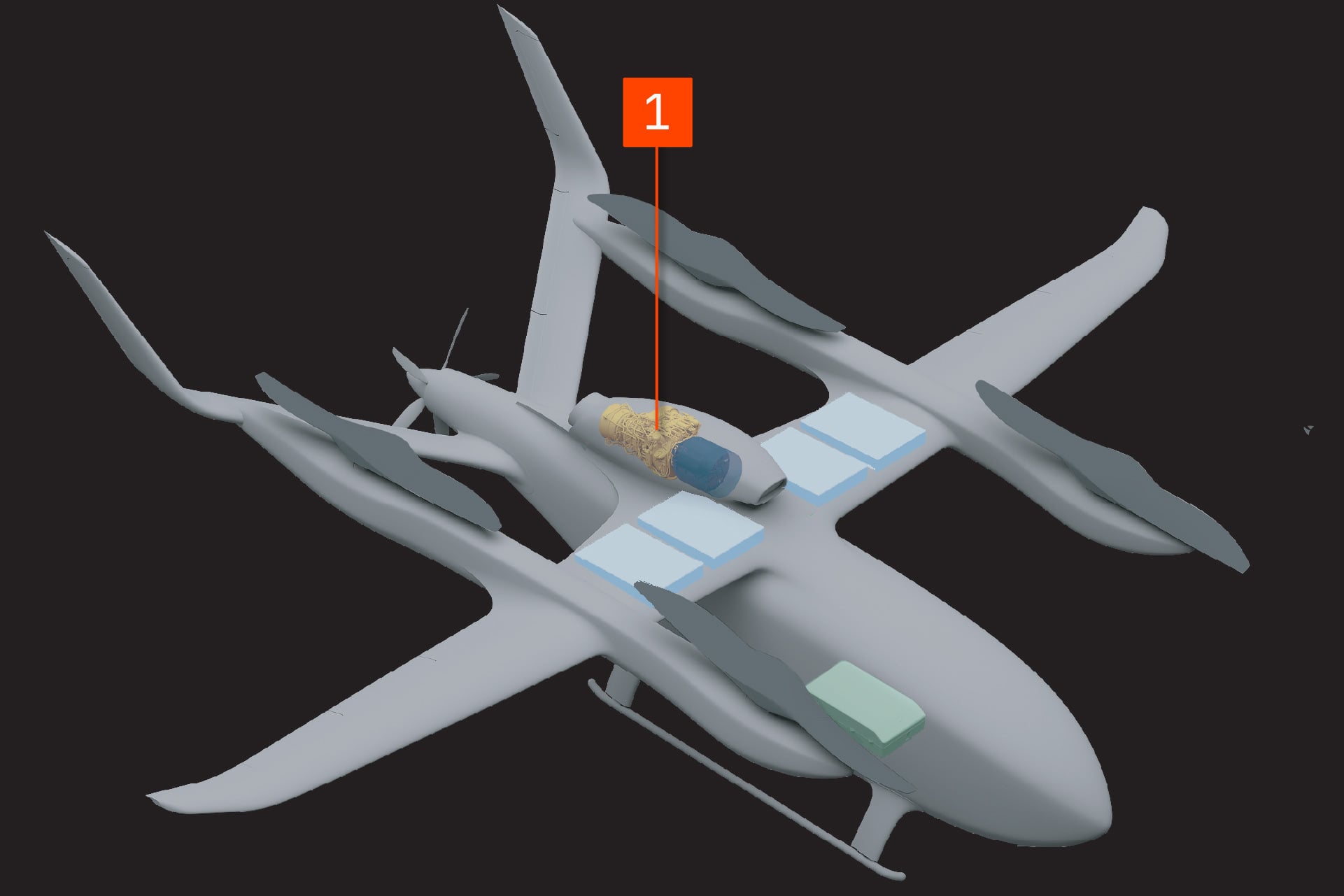
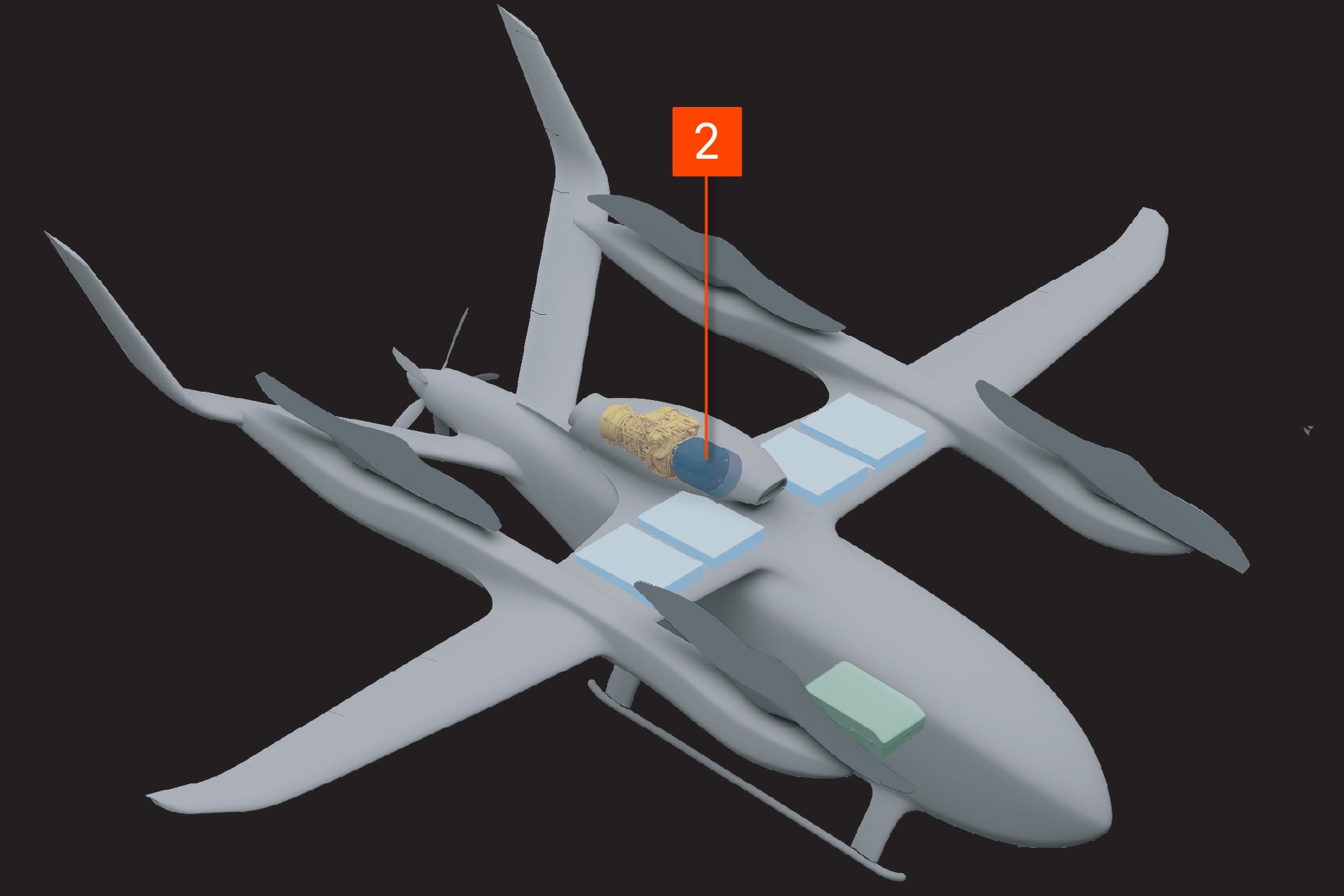
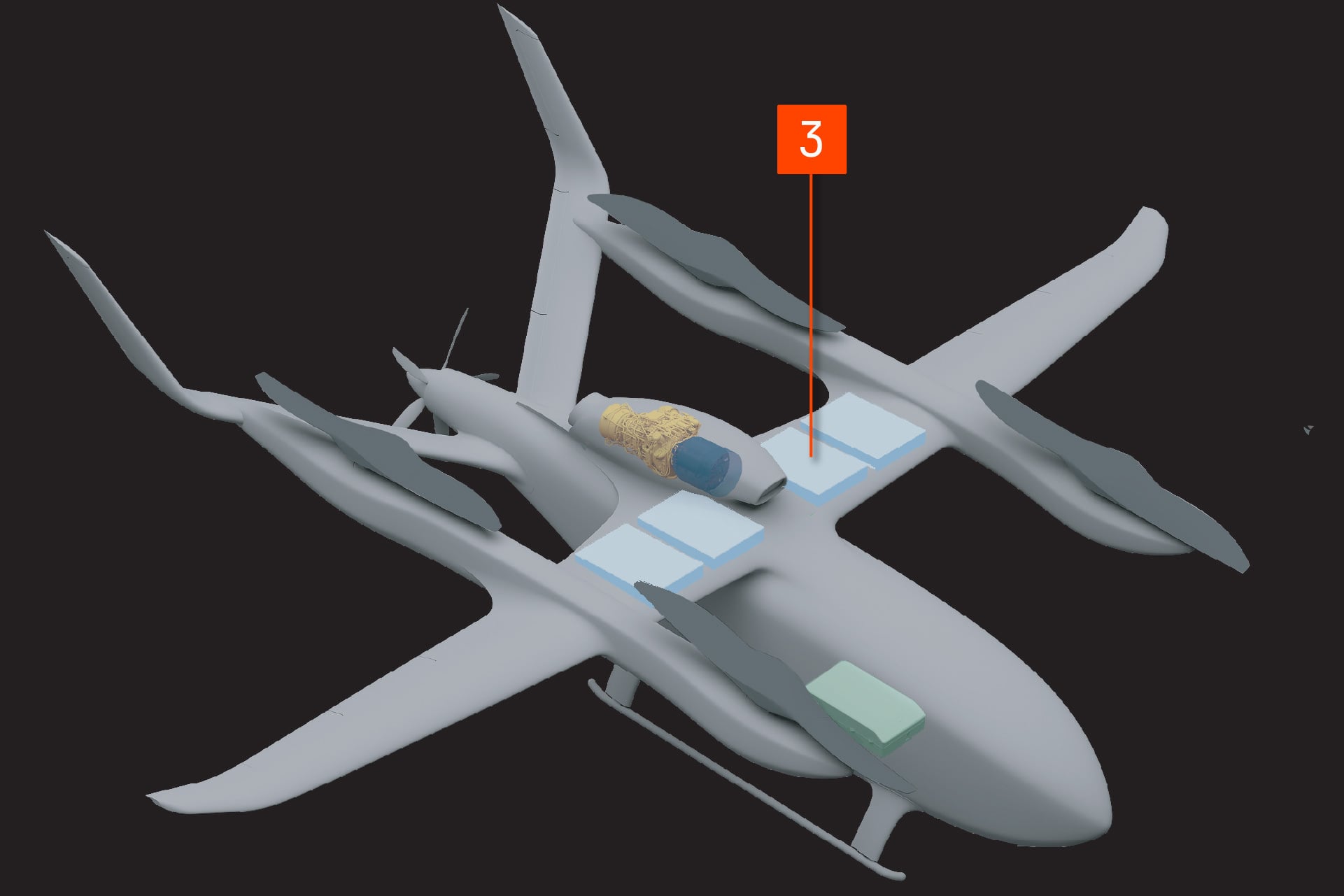
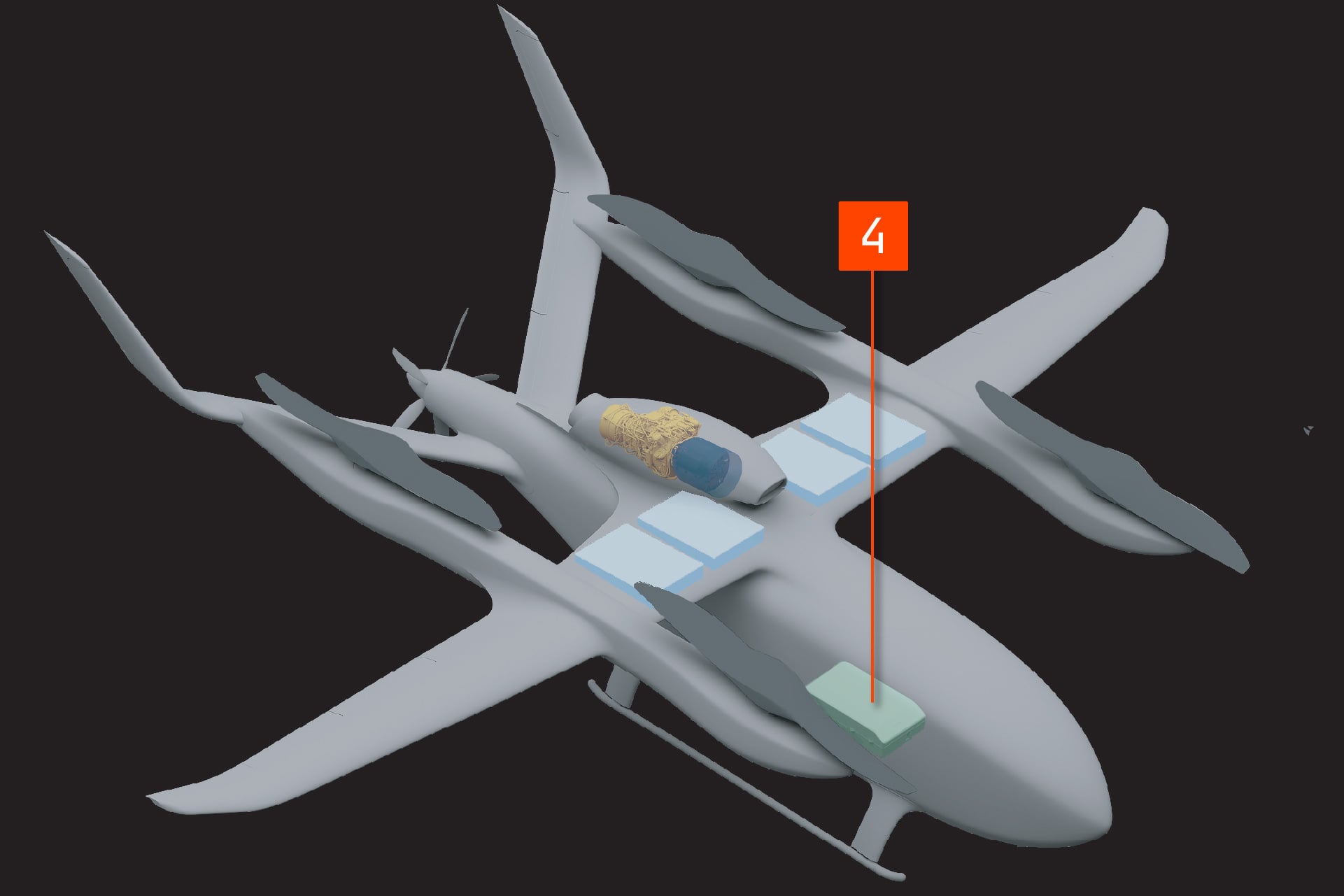
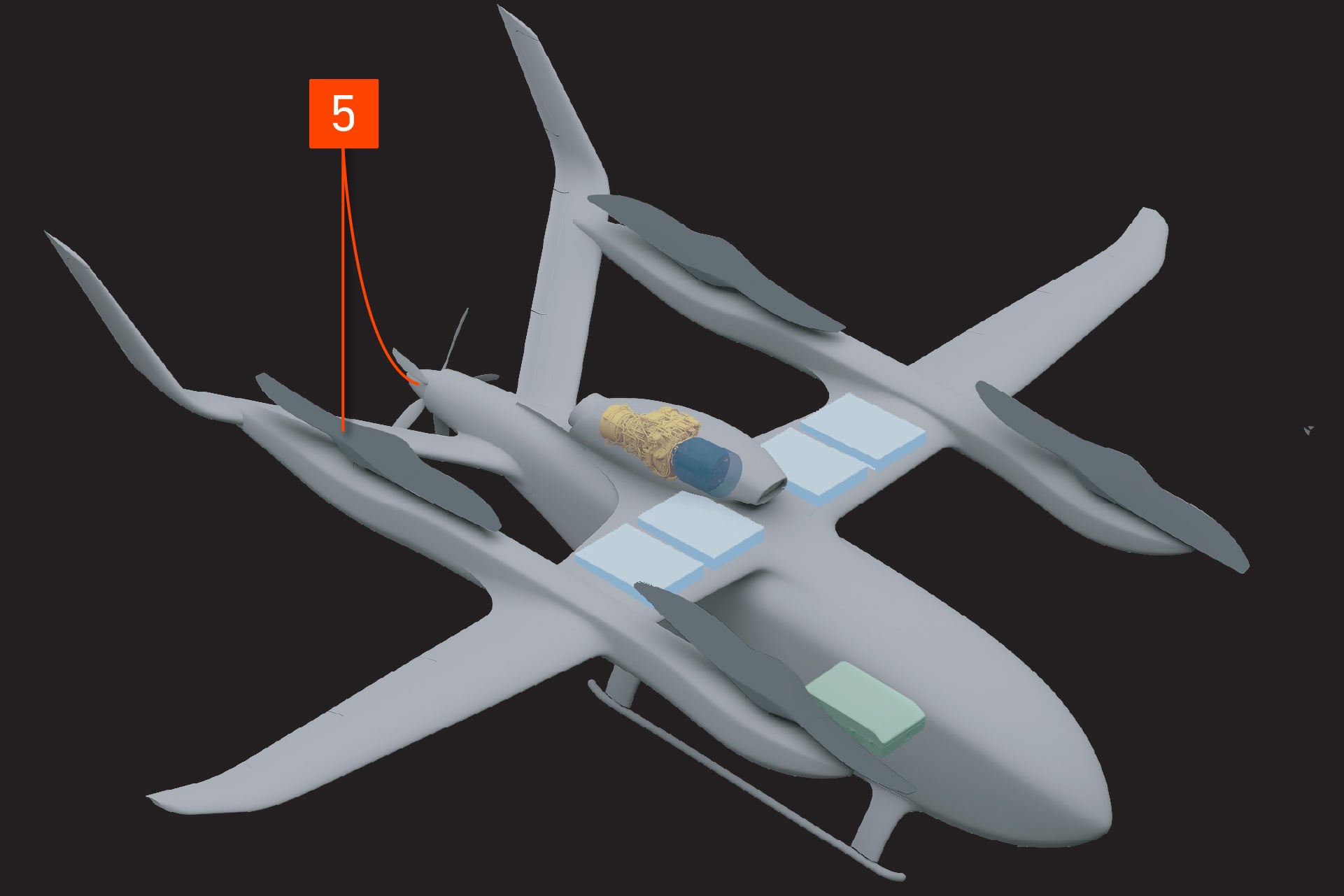
Engine
Engine drives the generator
Generator
Produces electricity
Fuel Storage
Fuel storage for engine
Battery
Charged from the generator
Electric Motors
Powered from the high-voltage bus
Defense
Advisory Board
James C. McConville
General, U.S. Army (Ret.)Served as 40th Army Chief of Staff (2019-2023) as the first aviator to hold this position. Gen McConville is qualified in the OH-58 Kiowa Warrior, the AH-64D Longbow Apache, the AH-6, AH-1 Cobra and other aircraft.
Turbogenerator
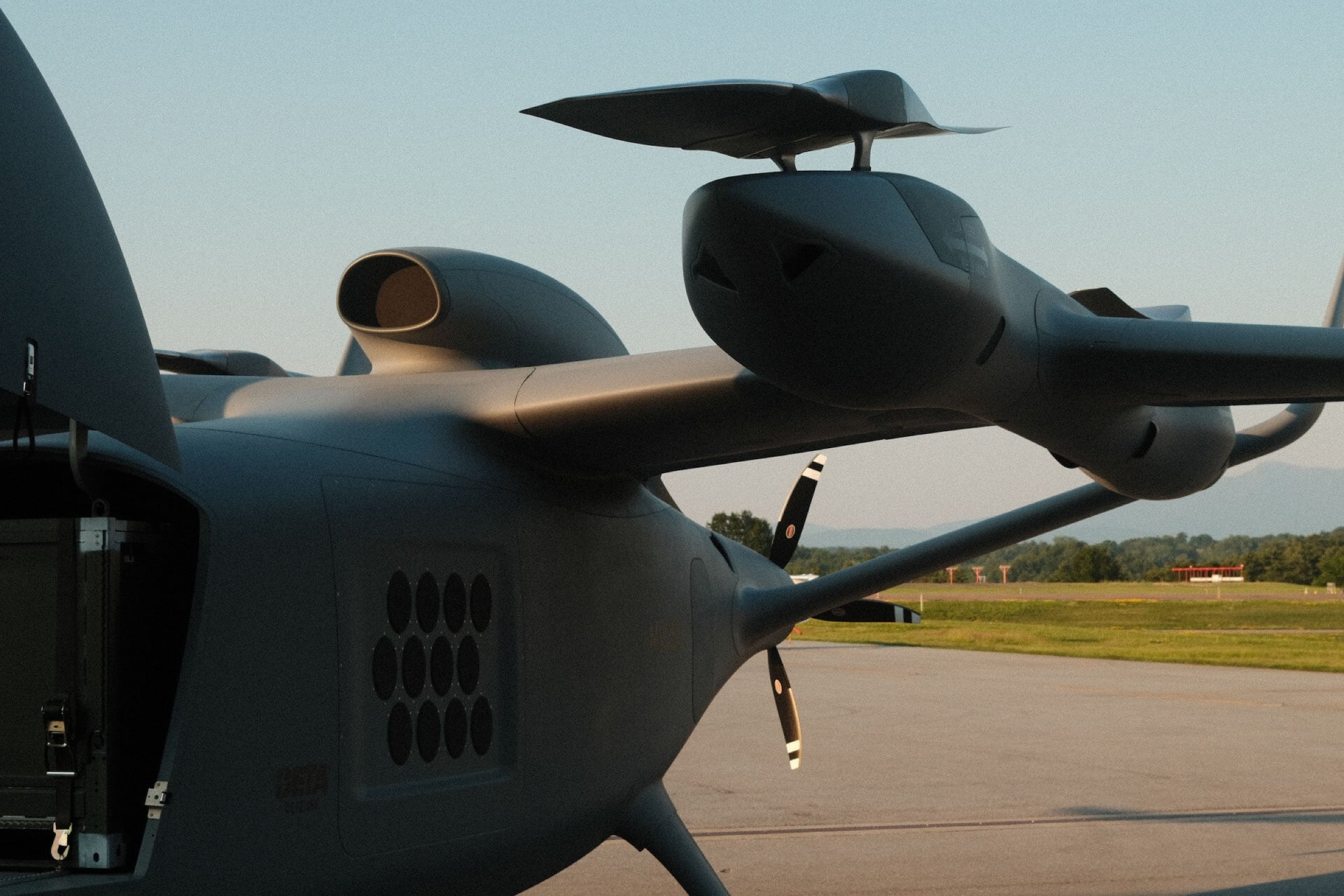
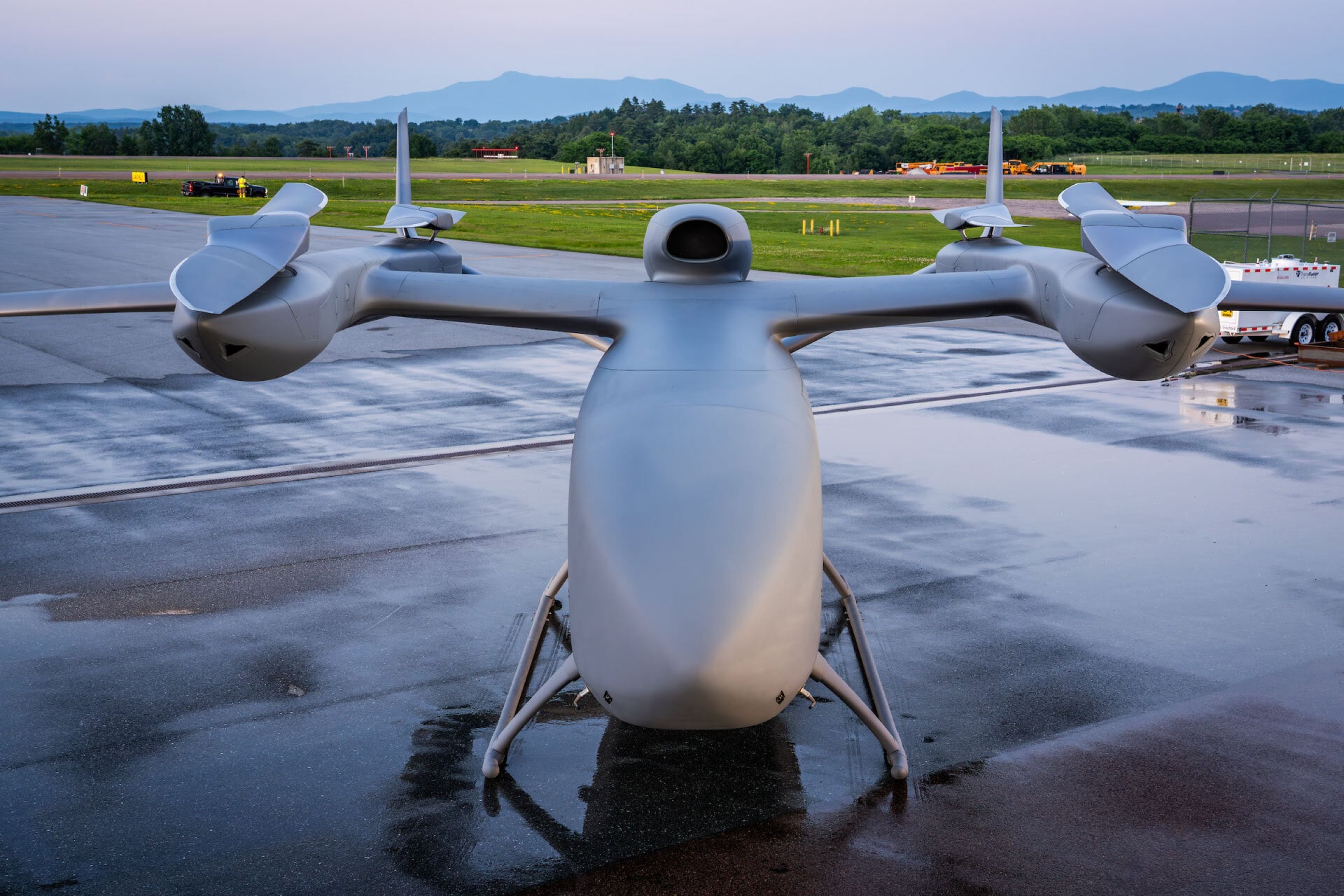
MV250’s powerplant combines proven turbine technology with BETA’s distributed electric propulsion architecture.
Powered by a series-hybrid system in which a turbogenerator supplies power directly to the aircraft’s 800-volt high-voltage bus rather than mechanically driving the propellers.
This hybrid-system enables speeds above 170 knots, sustaining efficient performance at 300 kilowatts or less during cruise. During vertical takeoff and landing when demand can exceed 1.2 megawatts, modular battery packs provide the additional power.
MV250's turbogenerator operates on JP-8, JP-5, and NATO F-34/F-44 fuels, eliminating the need for specialized charging infrastructure, fuels, or consumables.
Positioned above and aft of the wing, the turbogenerator reduces exposure to foreign object damage and helps minimize the aircraft’s infrared signature.
A projected ferry range of 1,300 nautical miles (NM) allows the aircraft to self-deploy rather than consume scarce C-17 or C-5 capacity. MV250’s mechanically simple propulsion system reduces the specialized tooling, spare parts, and maintenance associated with conventional rotorcraft.