


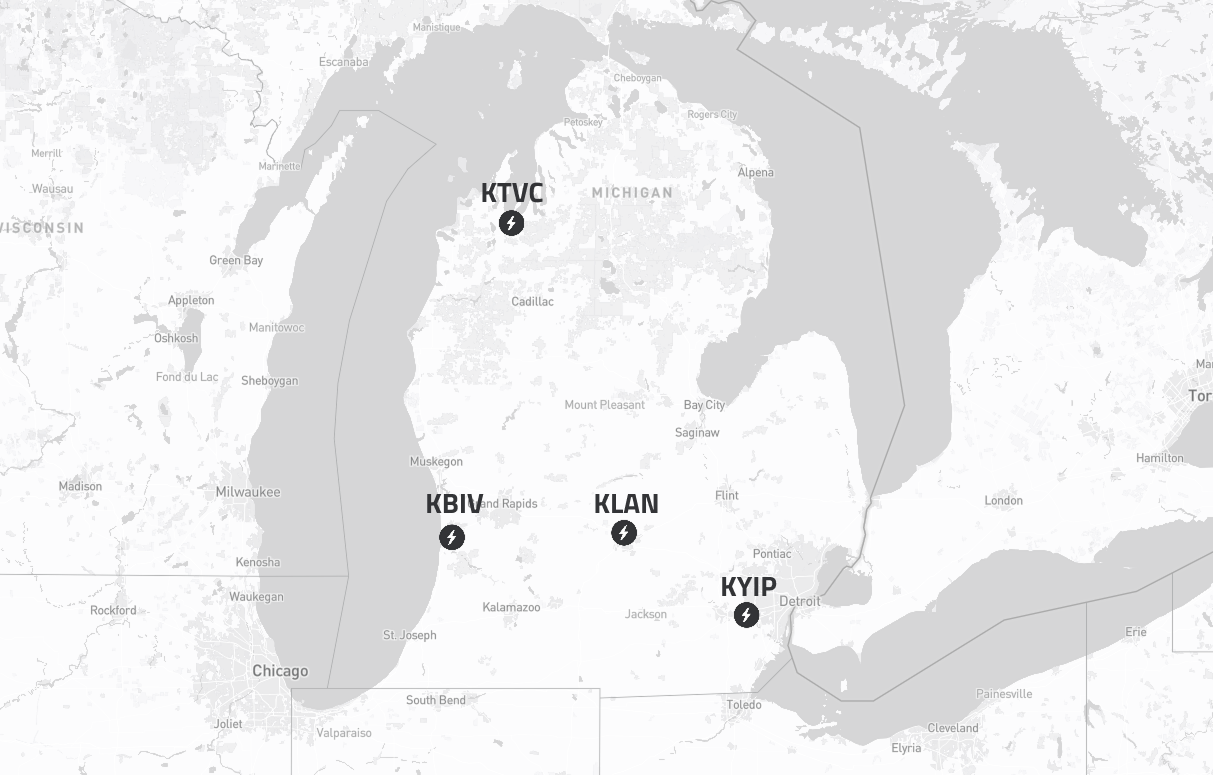
Four airports. Four charge sites.
Overview
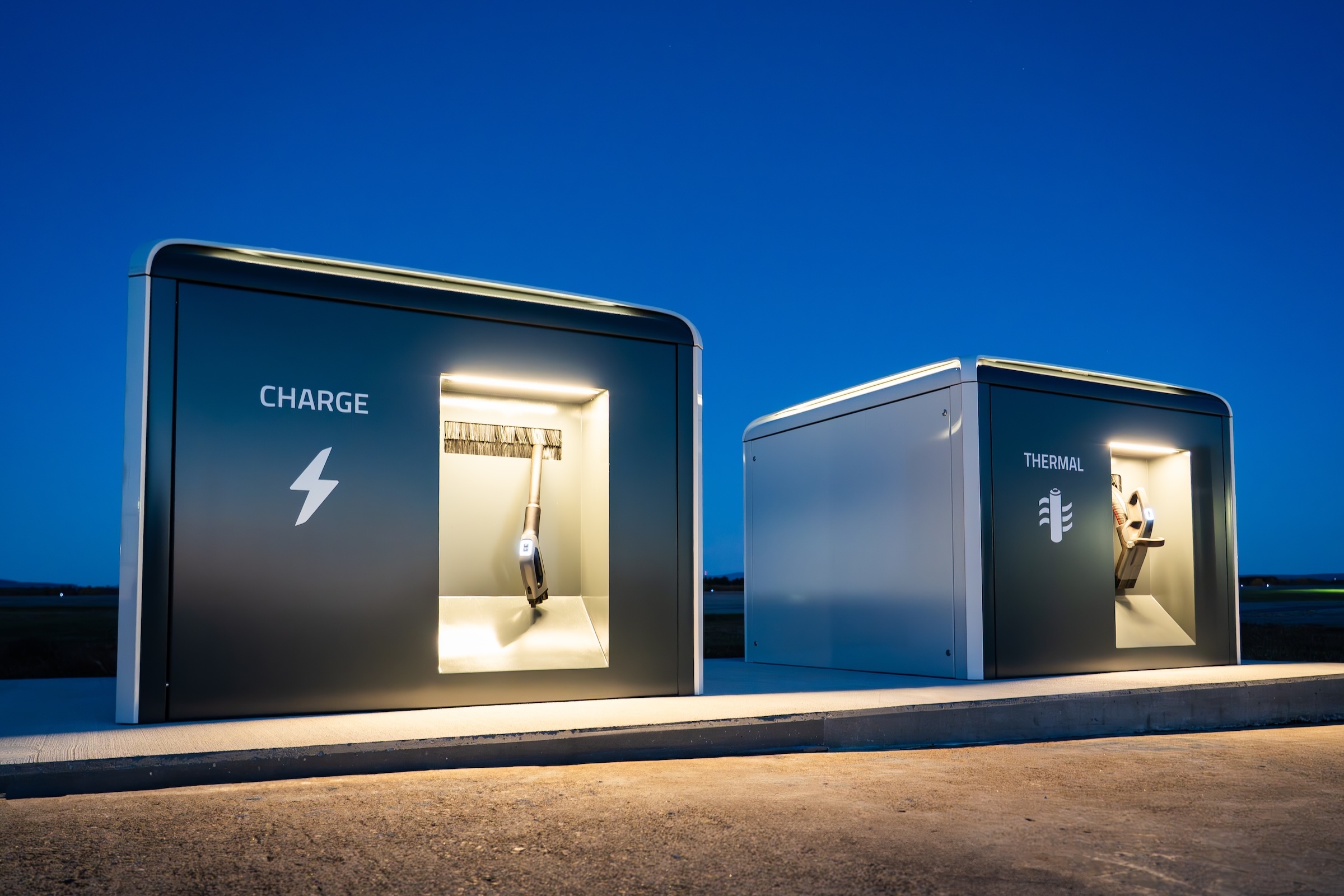
Michigan Department of Transportation placed BETA Charge equipment at four airports: Lansing, Traverse City, Willow Run, and Holland.
Each airport serves a different part of Michigan’s transportation system. Lansing serves cargo routes across mid-Michigan. Traverse City serves rural northern communities. Willow Run supports cargo operations near Detroit. Holland supports aircraft charging on the airport and public electric-vehicle charging in the parking area.
The four sites give Michigan installed charging locations for electric aircraft, ground equipment, and electric vehicles.
Customer:
Michigan Department of Transportation, Office of Aeronautics
Locations:
Lansing Airport (KLAN), Traverse City Airport (KTVC), Willow Run Airport (KYIP), and Holland Airport (KBIV)
Project:
Aircraft charging, electric ground-equipment charging, and public electric-vehicle charging
The work:
Michigan Department of Transportation needed charge sites that matched the work at each airport.
Cargo airports need aircraft charging near cargo operations. Rural airports need equipment that supports aircraft serving dispersed communities. General aviation airports need charging that fits the ramp, the parking area, and the people who use both.
Michigan selected four airports with defined operating roles and planned each site around those roles.
You can't fly an electric aircraft or drive an electric vehicle unless you have a network to support those vehicles...We wanted to be essentially an anchor for the Midwest when it comes to the electric aircraft charging network.
Zach TecsonMichigan Department of Transportation, Office of Aeronautics
Lansing Airport
Cargo access for mid-Michigan
Lansing serves as a cargo hub for mid-Michigan. Smaller airports within roughly 75 miles receive package deliveries today.
The charge site gives operators a location for planning shorter electric cargo routes between Lansing and those airports.
Traverse City Airport
Access for northern Michigan
Traverse City serves communities across northern Michigan.
The charge site gives medical operators and public agencies a location for planning aircraft operations that move supplies and support medical transport.
Willow Run Airport
Cargo infrastructure near Detroit
Willow Run serves as a primary cargo airport for Michigan and sits near Detroit Metropolitan Airport.
The charge site adds aircraft and ground-equipment charging at an airport that already handles cargo.
Holland Airport
Aircraft and electric vehicles at one site
Holland connects aircraft charging on the airport side of the fence with public electric-vehicle charging on the other side.
The site supports aircraft on the ramp and electric vehicles in the parking area. It also gives Michigan a location for planning routes across Lake Michigan toward Chicago and Illinois.
The Installation
Michigan Department of Transportation used its Electric Aviation Activation Fund as the primary state funding source. BETA contributed matching funds. The Michigan Economic Development Corporation also supported the project.
The teams reviewed the aircraft and vehicles that would use each site, available electrical service, ramp access, parking areas, airport plans, and approval requirements.
Three larger airports worked directly with the Federal Aviation Administration on documentation. Michigan Department of Transportation handled the Holland approvals through its Office of Aeronautics.
The work included airport-plan updates, site review, utility coordination, and installation planning.
The beta team were great at making sure all of that information was submitted correctly and on time.
Zach TecsonMichigan Department of Transportation, Office of Aeronautics
The Network
Michigan’s four charge sites connect to BETA Charge infrastructure in Ohio and across the East Coast.
The network gives operators locations to plan routes, charge aircraft, and continue the flight. It also gives airports charging equipment for aircraft and ground vehicles at the same site.
At Holland, one installation serves the ramp and the parking area.
The Result
Michigan Department of Transportation needed charge sites that matched the work at each airport.
Cargo airports need aircraft charging near cargo operations. Rural airports need equipment that supports aircraft serving dispersed communities. General aviation airports need charging that fits the ramp, the parking area, and the people who use both.
Michigan selected four airports with defined operating roles and planned each site around those roles.